


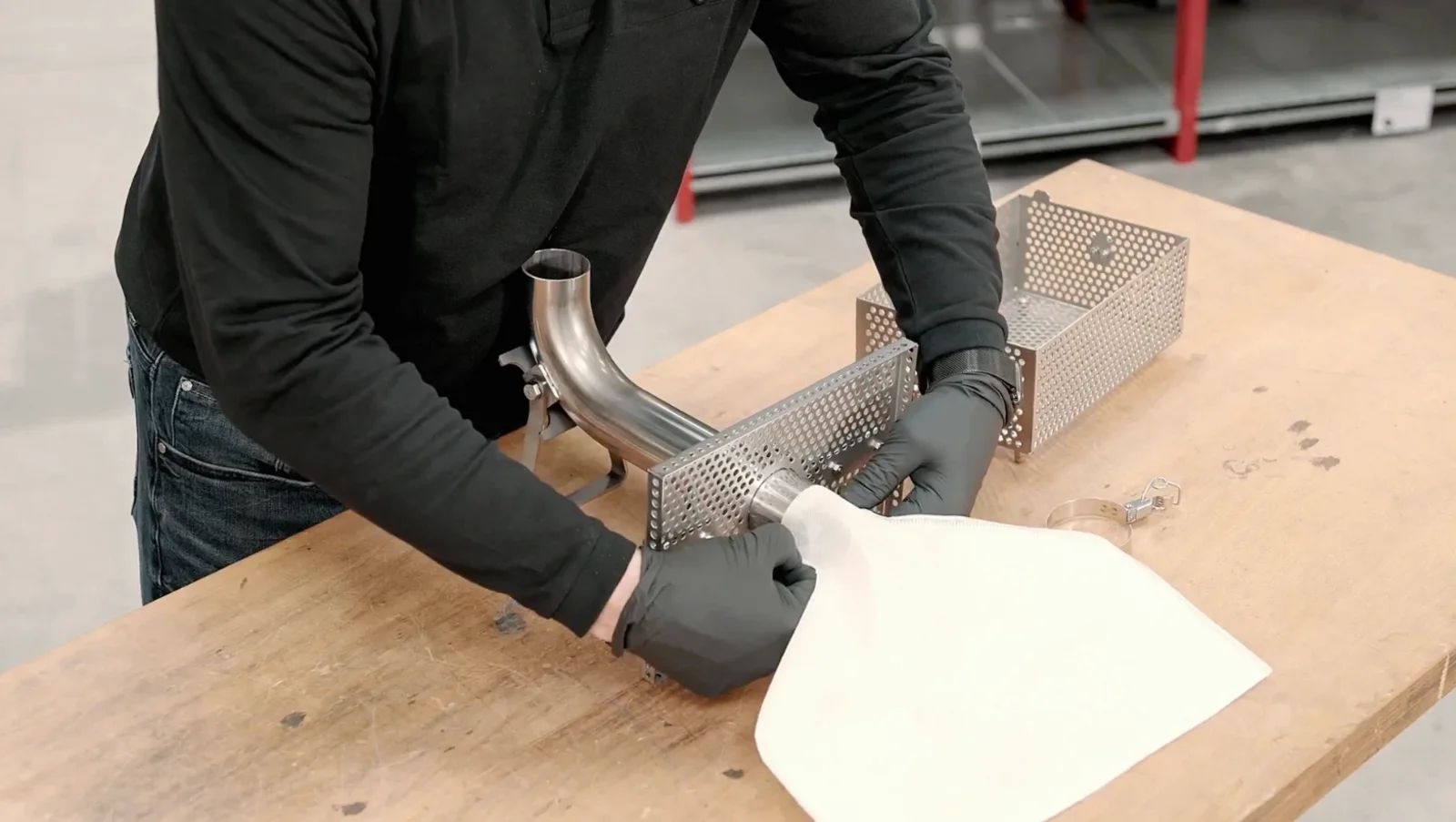
Understanding the basics
Filter technology determines not only the degree of separation but also the stability of the entire process. As the load increases, flow, pressure drop, and performance change. Therefore, what matters is not the filter class, but how filters perform in actual operation, how they are cleaned, and how they are integrated into the process.
Filters do not operate consistently. The assumptions about them, however, do. Filter technology is often defined in terms of classes, materials, or separation efficiency. In practice, however, it is not the initial state that matters, but how the filter behaves during operation. Filters change—and with them, the entire process.
What Filters Really Do
Filters are often viewed as passive barriers: clean air in, particles out. In reality, they actively influence the process. They affect flow, pressure conditions, and thus the overall system performance.
As the filter becomes increasingly loaded, a layer of particles forms on its surface. This so-called filter cake alters the separation behavior. In many cases, it initially improves filtration—but at the same time, pressure drop increases. The filter becomes more effective and, at the same time, creates resistance. The balance between separation, air flow, and energy consumption is therefore crucial. This balance is not static. It shifts continuously during operation—depending on particle size, dust volume, humidity, and process dynamics. What works under laboratory conditions can become unstable in everyday use.
The design also plays a central role. Surface filters specifically trap particles on the surface and can be cleaned in a controlled manner. Depth filters bind particles within the material—often with higher initial efficiency but limited regenerability.
Filter technology is therefore not a matter of individual components, but of the correct system design. Performance remains stable only when separation, cleaning, and the process are coordinated. Filters do not work solely against particles. They operate within the tension between separation and resistance.
Classify filter classes correctly
Filter classes such as L, M, or H describe which particles a filter can capture under defined conditions. They are an important tool for occupational safety—but they do not indicate how a system performs in actual operation. This is because filter classes are determined under standardized test conditions. However, other factors come into play during actual operation: varying particle sizes, different dust levels, humidity, or fluctuations in airflow. These factors determine whether a filter can maintain its protective effect over time.
A higher filter class therefore does not automatically mean greater safety. An H-class filter can lose its effectiveness if it is incorrectly sized, not cleaned sufficiently, or operated outside its optimal operating range. Conversely, a properly sized system with a lower class can operate more reliably and safely.
Specialty filters also follow this logic: HEPA filters ensure the highest separation efficiency for the finest particles, but are sensitive to loading and pressure drop. Activated carbon filters bind gaseous substances, but their effectiveness is limited and depends on concentration and contact time.
Therefore, it is not the classification alone that is decisive, but its integration into the process. Filter classes define the goal—the design determines whether it is achieved. Filter classes provide assurance; process understanding ensures it.
Types of Filters in Use
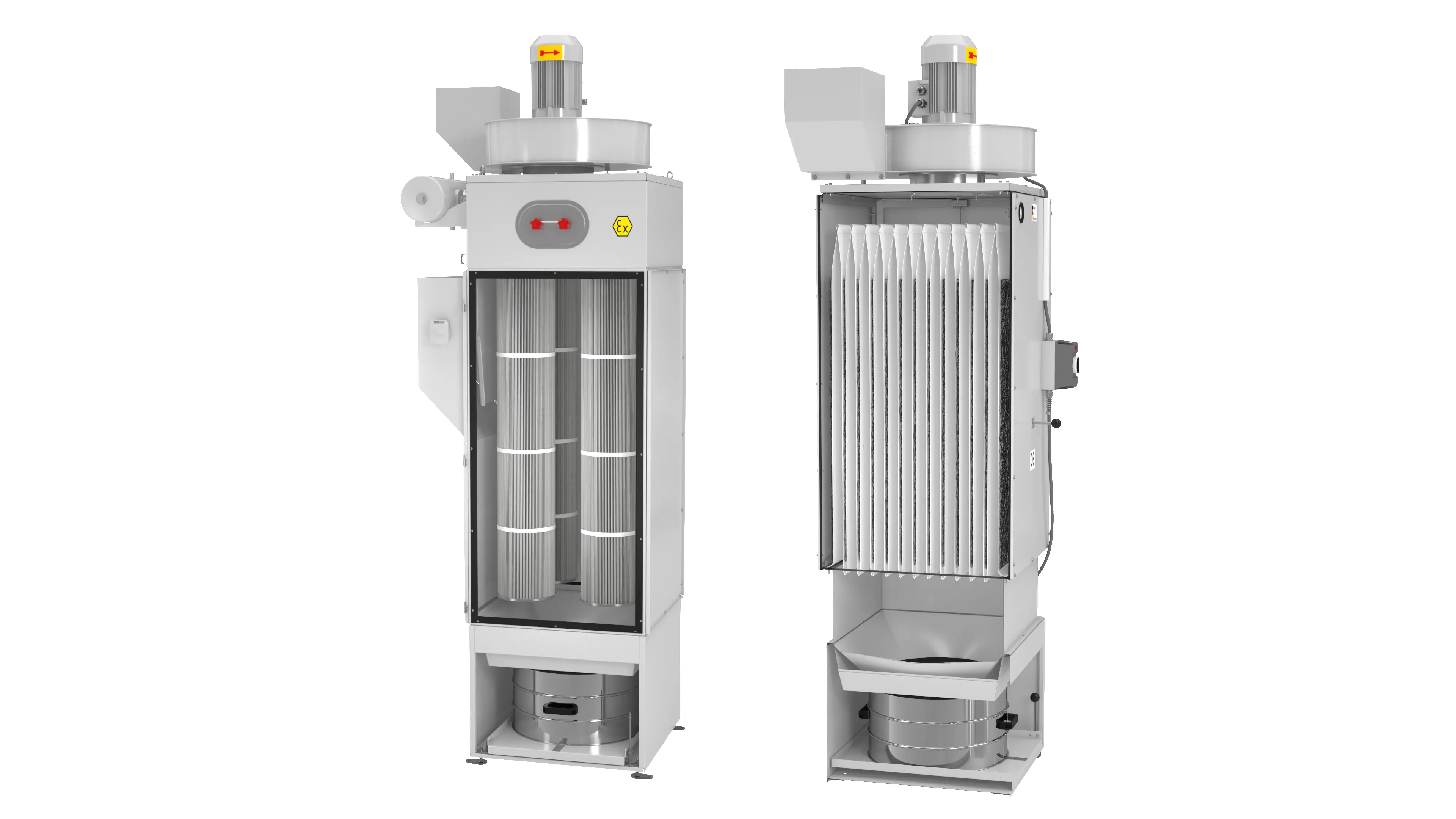
Filters are often selected based on their design: cartridge filters, pocket filters, filter bags, or central filter systems. However, what matters most is not the shape, but how the filter performs during operation—particularly during loading and cleaning. Basically, two operating principles can be distinguished:
Surface filtration
: Particles are selectively separated at the filter surface. A defined filter cake forms, which can be cleaned in a controlled manner. This design enables stable separation conditions and reproducible performance over extended periods.
Depth filtration
: Particles penetrate the filter material and are trapped inside. The initial efficiency is often high, but the regenerability is limited. As the load increases, the flow behavior changes—the filter becomes more difficult to control.
Common filter types follow these principles:
Which filter type is appropriate is not determined by the design alone, but by the interplay of dust type, quantity, process dynamics, and desired operating mode. It is not the design that matters, but whether the filter remains controllable within the process.
filter cleaning
Filters only work as well as they are cleaned. As the filter becomes clogged, pressure drop increases, the air flow rate decreases, and the process becomes unbalanced. Cleaning is therefore not a secondary process, but a central component of the filter’s function.
The goal of cleaning is not a “clean” filter, but a stable operating condition. A residual deposit—the filter cake—is often necessary to ensure consistent separation performance. If it is completely removed, the process repeatedly returns to its unstable initial state.
The type of cleaning determines whether this equilibrium can be maintained:
Timing is crucial:
Filter cleaning is therefore not an additional technical function, but a control mechanism that keeps the entire process stable. A filter without coordinated cleaning does not suddenly lose performance. It loses it gradually—during operation.
Practice will show whether the filtration technology is effective—or just works.
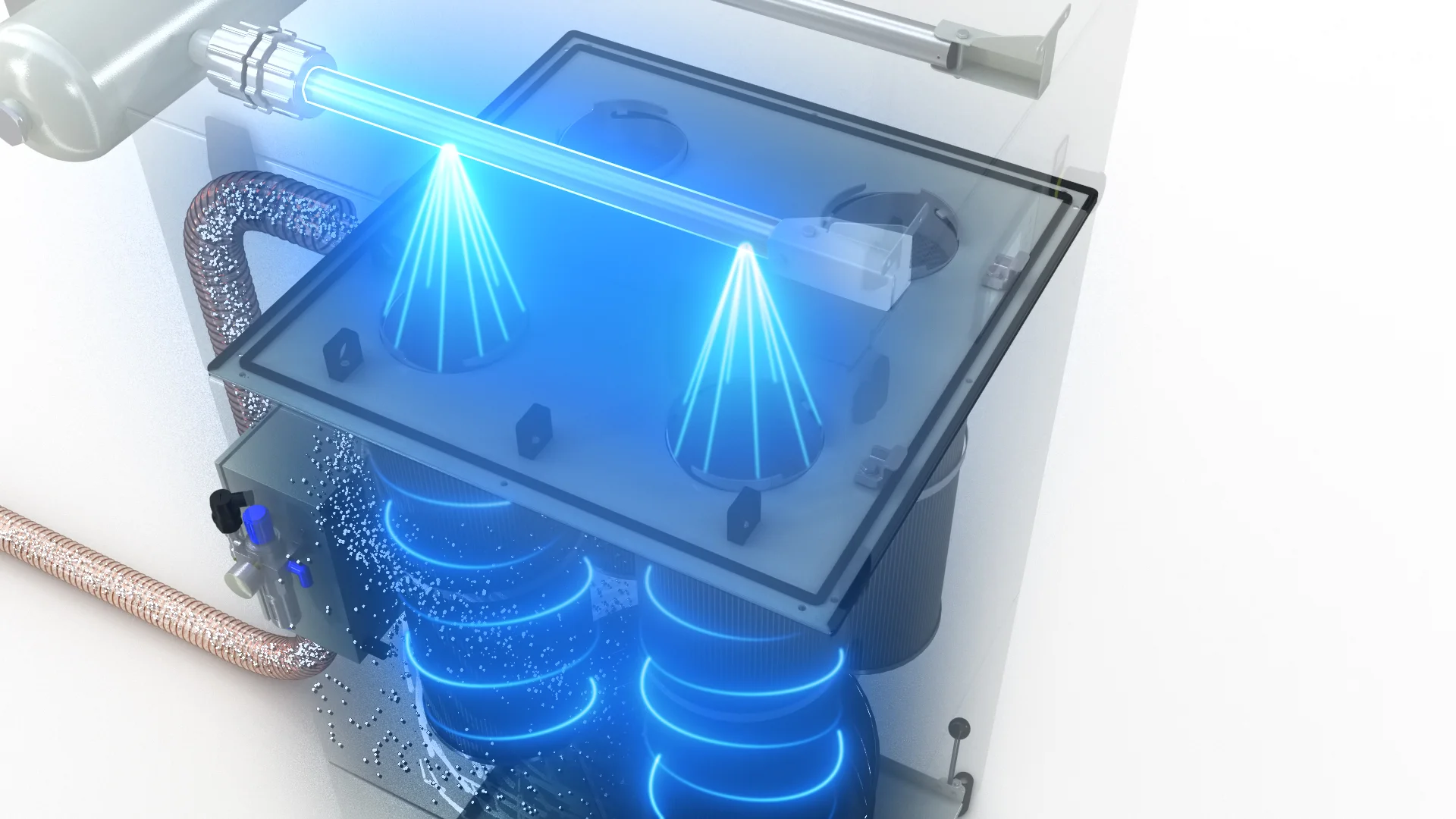

Fine particles quickly clog filters and are difficult to remove. Without proper cleaning, pressure drop increases continuously, performance declines, and the process becomes unstable.
In practice, surface filters with targeted compressed air cleaning have proven effective. They trap particles on the surface and enable reproducible cleaning—even with challenging dusts.
When dealing with high dust loads, it is not just the filter that matters, but the entire system design. Filter areas that are too small or inadequate cleaning quickly lead to system overload.
Practical solutions combine sufficiently sized filter areas with optimized cleaning. This keeps pressure drop manageable and ensures the system remains efficient over the long term.
Different types of dust behave differently: dry or moist, fine or coarse, sticky or free-flowing. A system designed for one condition quickly loses stability when conditions change.
In practice, it is clear that a robust filter and cleaning strategy that functions reliably even under changing conditions is crucial.
Many applications do not require peak performance, but rather consistent performance over time. Fluctuating suction power leads to inconsistent results and increased maintenance requirements.
Proven solutions rely on a coordinated combination of filter type, cleaning, and system design. The goal is not maximum filtration, but stable operating conditions.
Choosing a filter is only part of the solution. What really matters is how the filtration technology is designed to work in conjunction with the process. Performance is not achieved through individual components, but through the interaction of separation, airflow, and cleaning.
In practice, four factors have proven to be decisive:
Filtration technology is not about individual components, but about proper process design.
The best solution depends on particle characteristics, airflow, contamination levels, and operating conditions. RUWAC helps you make informed decisions about filter technology and develop solutions that perform reliably in everyday use—tailored to your specific application and actual operating conditions.
Not when new, but during operation. A filter is properly sized when pressure drop, air flow rate, and separation efficiency remain stable over time—even under changing conditions. Fluctuating air flow rate or frequent maintenance are clear indicators of improper sizing.
Typical signs include increased energy consumption, reduced air flow rate, or shorter maintenance intervals. Often, the separation rate remains constant at first—even as the process becomes unstable in the background.
As soon as fine, sticky, or large amounts of dust accumulate. In such cases, proper cleaning determines whether the filter will continue to function effectively or gradually lose performance.
It determines not only the separation efficiency but also the loading behavior. Fine particles form dense layers, while coarse particles settle differently. What matters is how the material behaves in the filter—not just how small it is.
When airflow, dust load, or process dynamics reach their limits, a filter becomes a system: featuring a pre-separator, multi-stage filtration, or customized airflow management.