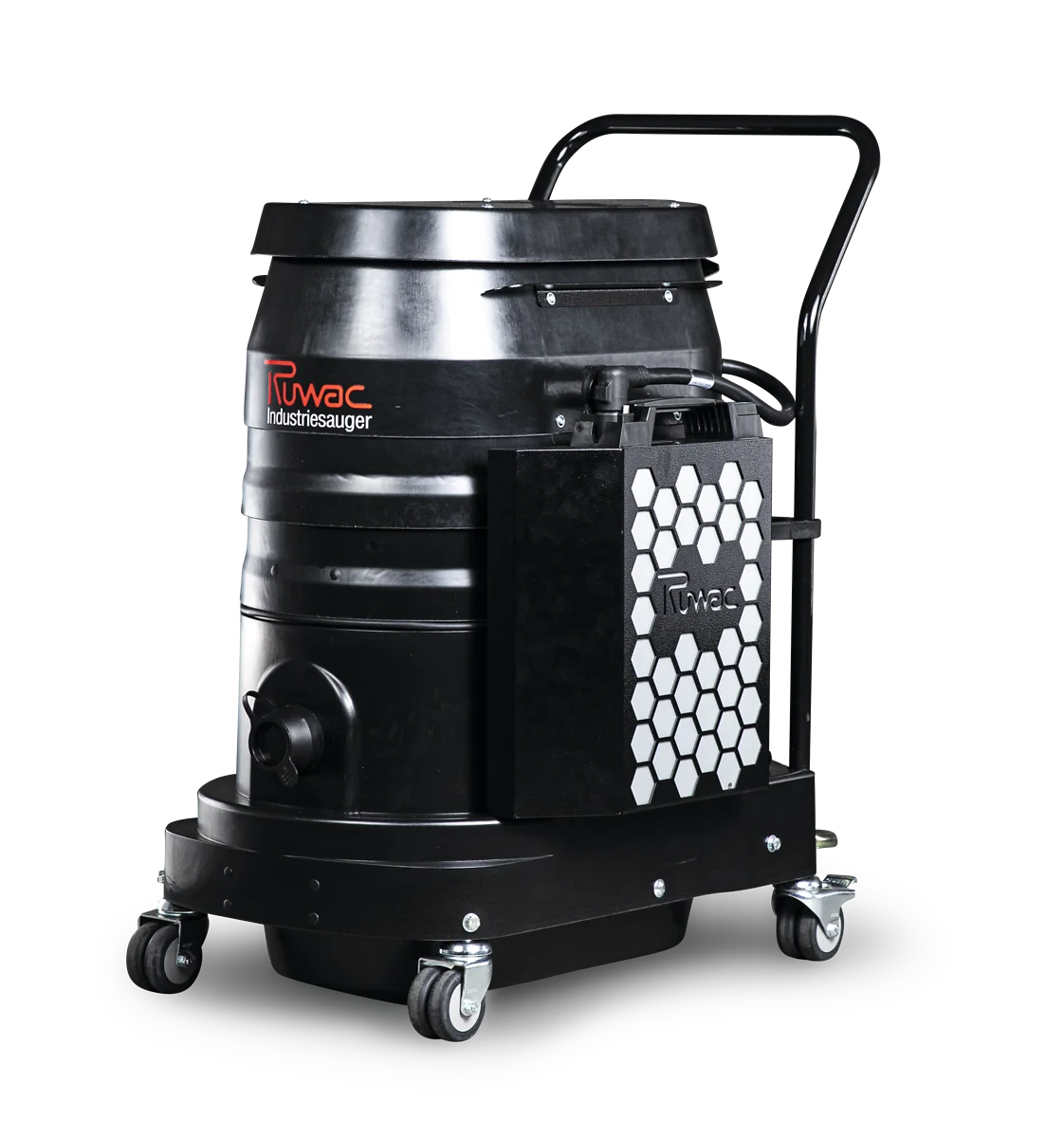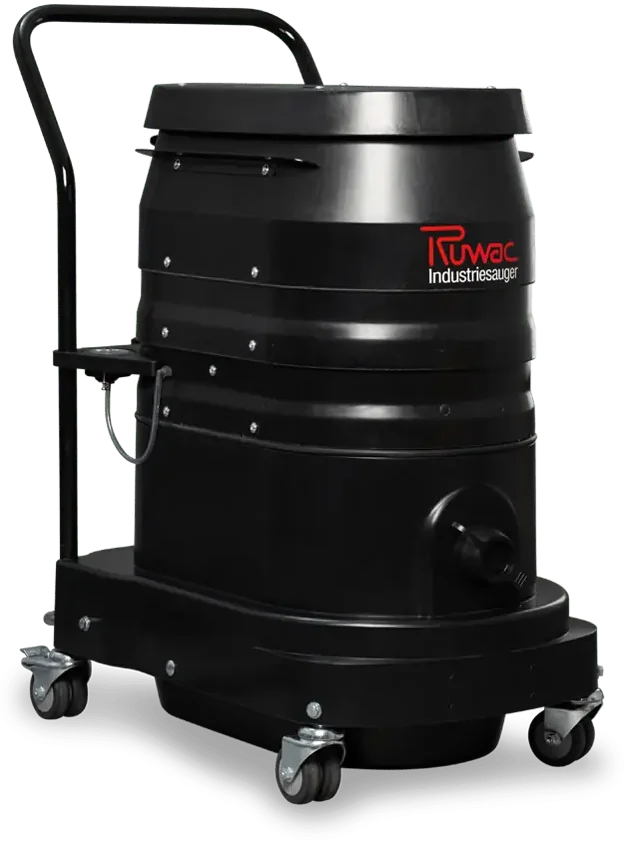


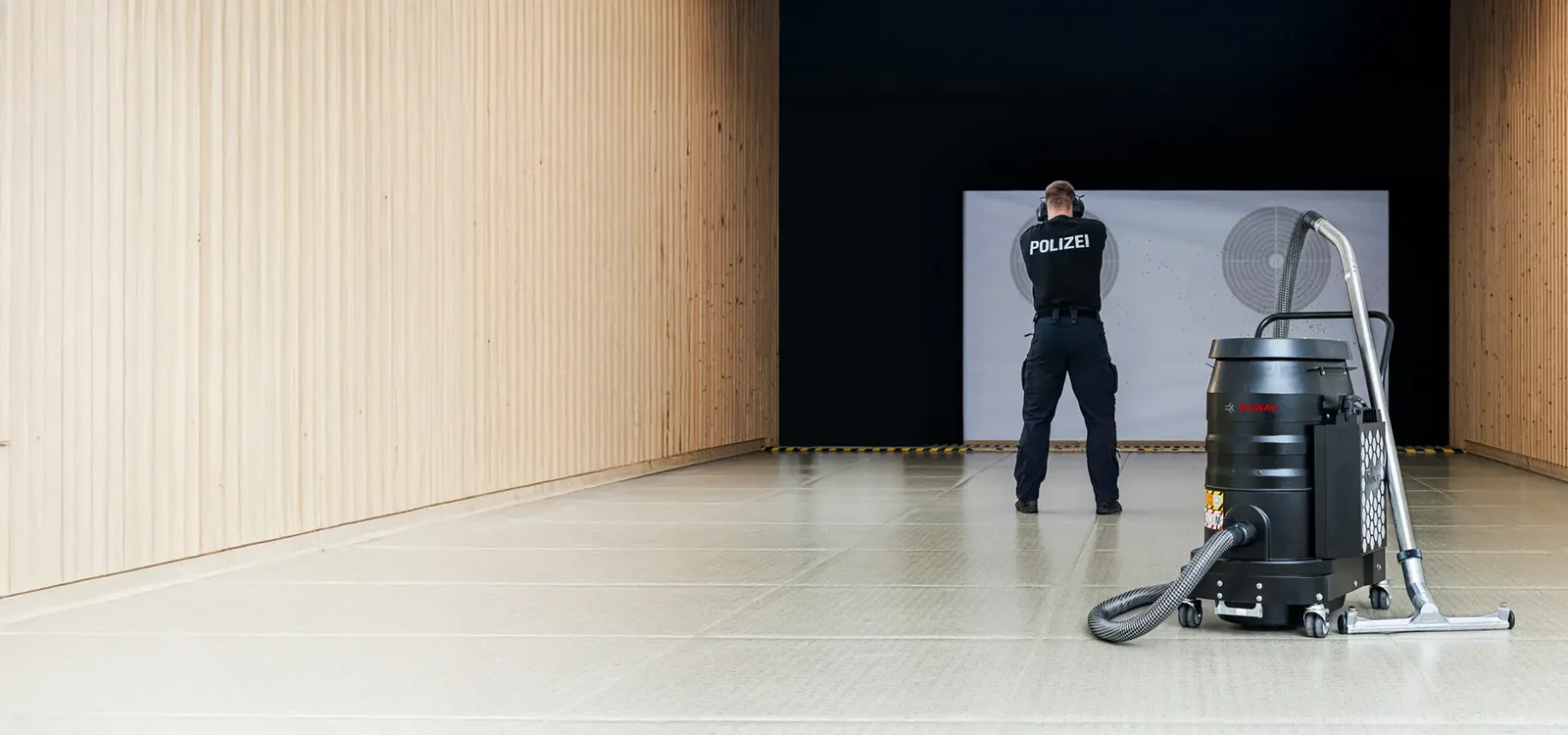
During the operation of indoor shooting ranges, incomplete combustion of ammunition results in unburned propellant residue. These residues accumulate particularly in the first few meters of the shooting lane and must be removed regularly. Cleaning must be performed exclusively with spark-free and antistatic equipment, as unsuitable vacuum cleaners can lead to spontaneous combustion or deflagration. Special industrial vacuums in ACD or ATEX design variants enable safe and standard-compliant cleaning of shooting ranges.
Compare all our models
Scroll sideways to see more models.
Housing
motor power
vacuum pressure
¹ measured using a 3-meter hose
How propellant residue forms in indoor shooting ranges
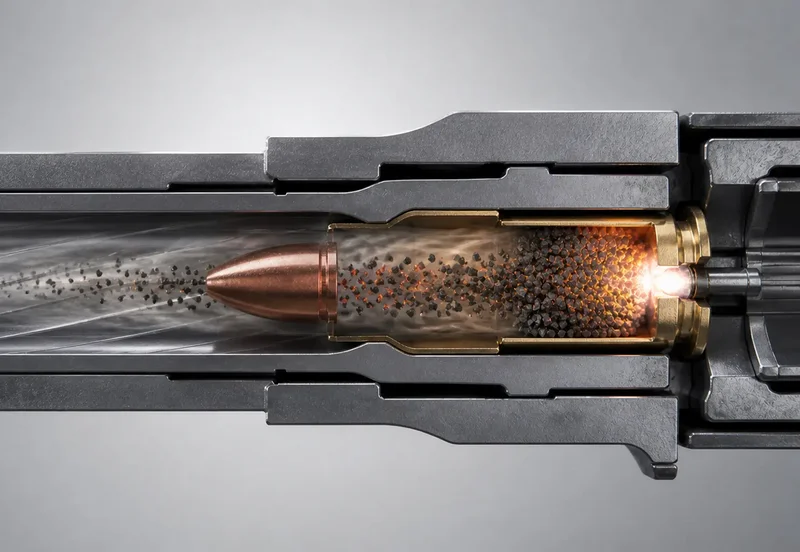
When firing, the propellant in the ammunition does not burn completely. This incomplete combustion produces fine powder residues that settle on the firing range.
Depending on the type of firearm and ammunition, different propellant powders may be present. In many cases, this is nitrocellulose powder (NC powder); in other applications, it is black powder. These residues accumulate continuously during shooting operations.
The area within the first five to ten meters in front of the shooter’s position is particularly affected. Experience shows that the largest amounts of unburned powder particles settle there. Regular cleaning of this area is therefore an important part of the safe operation of indoor shooting ranges.
Typical residues in indoor shooting ranges
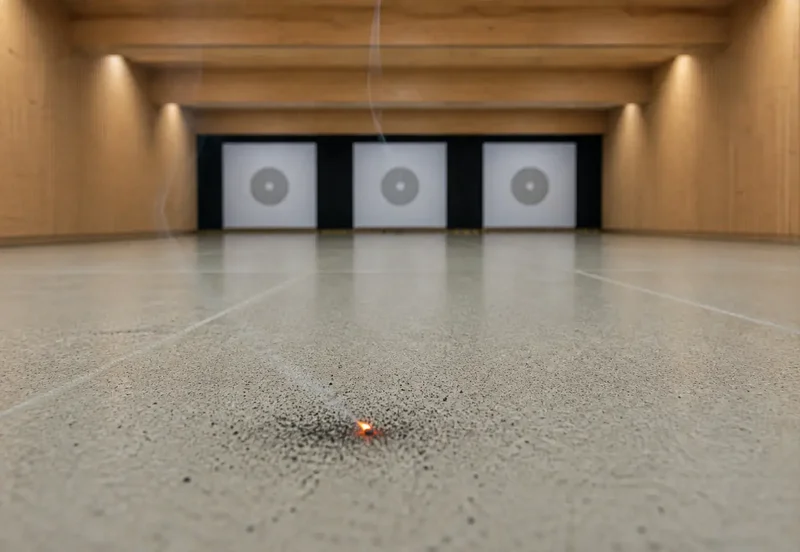
Why propellant residue poses a safety hazard
Unburned propellant powder residues are flammable substances. If they are collected using unsuitable cleaning equipment, sparks, hot surfaces, or electrostatic charges can cause spontaneous combustion or deflagration.
The use of conventional household or industrial vacuum cleaners is particularly critical. These devices are generally not designed to handle flammable powder residues and can create potential ignition sources in the airflow or in the filter system.
Therefore, only equipment designed to reliably prevent sparking and electrostatic charging may be used in indoor shooting ranges. A suitable cleaning solution must meet explosion protection requirements and ensure the controlled collection of powder residues.
Typical risks associated with improper cleaning
Technical Requirements for the Safe Cleaning of Indoor Shooting Ranges
Cleaning indoor shooting ranges requires specially designed equipment. Since unburned propellant residues are flammable, the vacuum cleaners used must be designed in such a way that ignition sources are reliably eliminated and electrostatic charging is prevented.
A suitable cleaning solution for shooting ranges should therefore meet the following criteria:
Only systems that meet these requirements enable safe and standard-compliant cleaning of indoor shooting ranges.
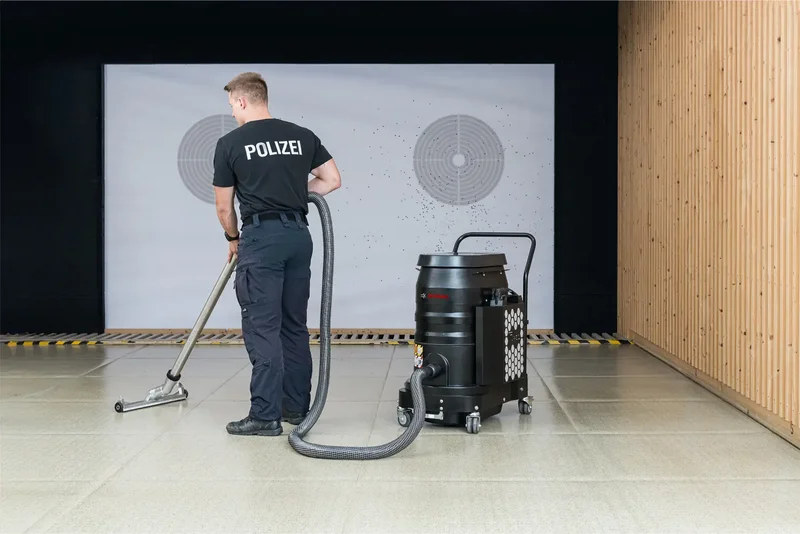
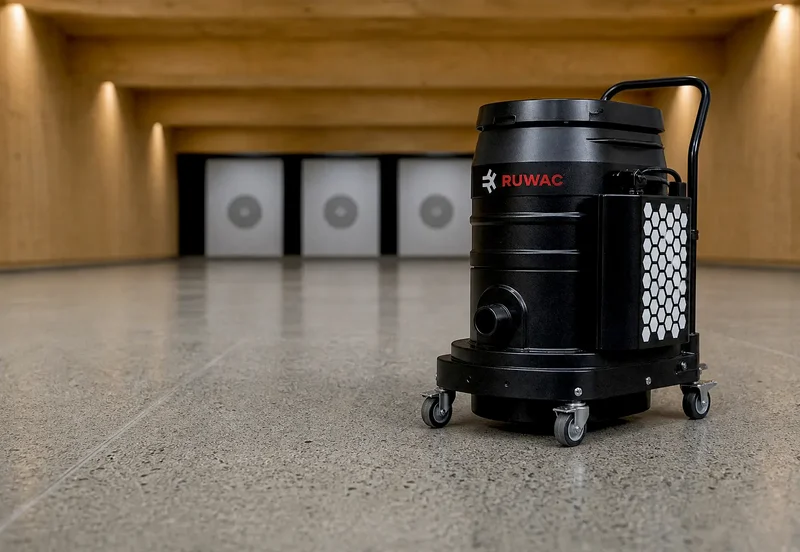
Industrial vacuum for the safe cleaning of indoor shooting ranges
Specially designed industrial vacuums are used to clean indoor shooting ranges, enabling the safe collection of propellant residue. These devices are engineered to eliminate potential ignition sources and safely dissipate static electricity.
Cleaning takes place directly on the firing range: powder residues are collected and stored in a closed container system. This allows deposits to be reliably removed without powder particles being redistributed throughout the room.
Typical features of such cleaning systems include:
This allows operators to clean their indoor shooting ranges safely and reliably.
Industrial vacuum cleaners are used in many indoor shooting ranges to safely collect powder residue and clean the facility on a regular basis. The following examples illustrate typical applications.
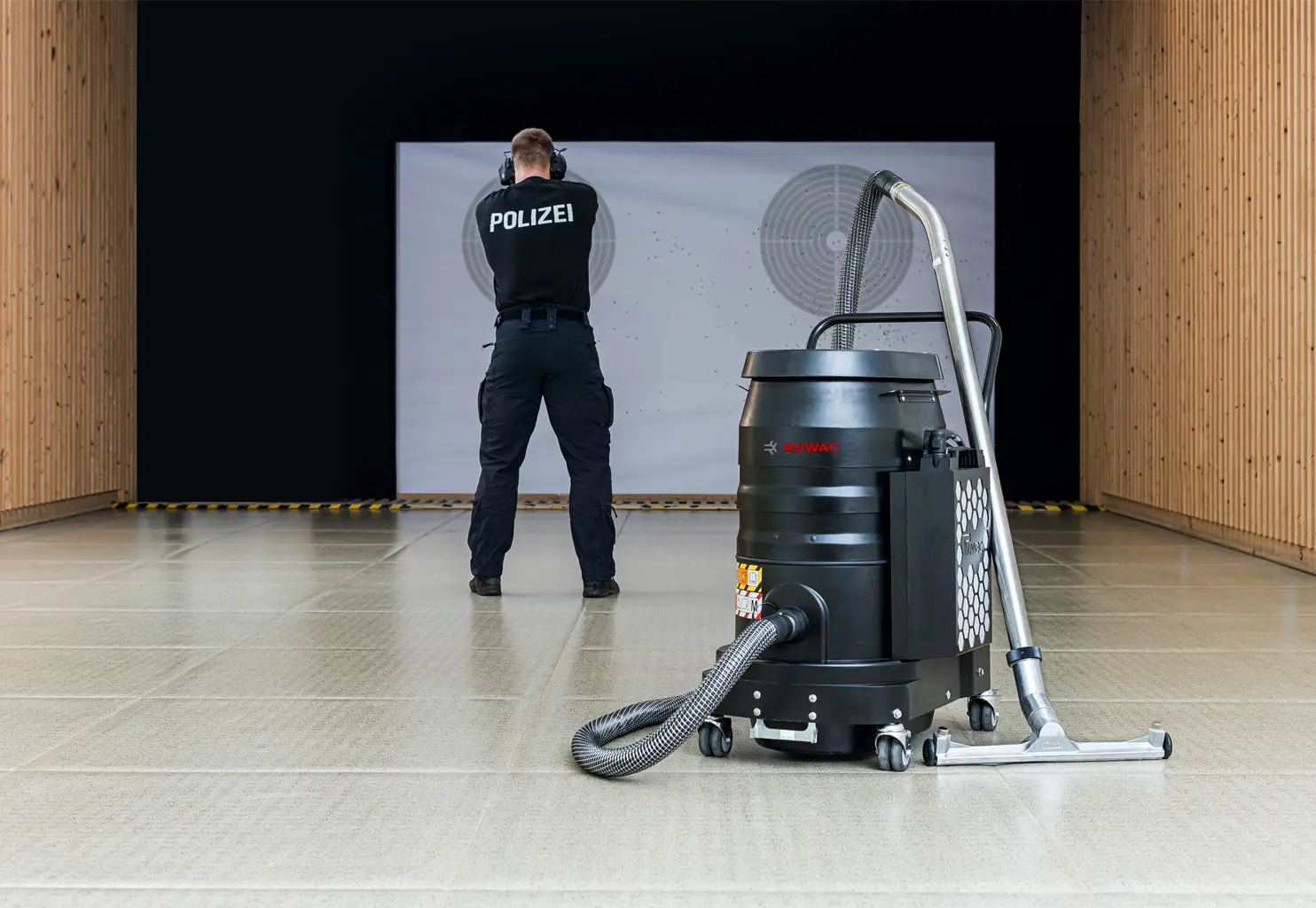
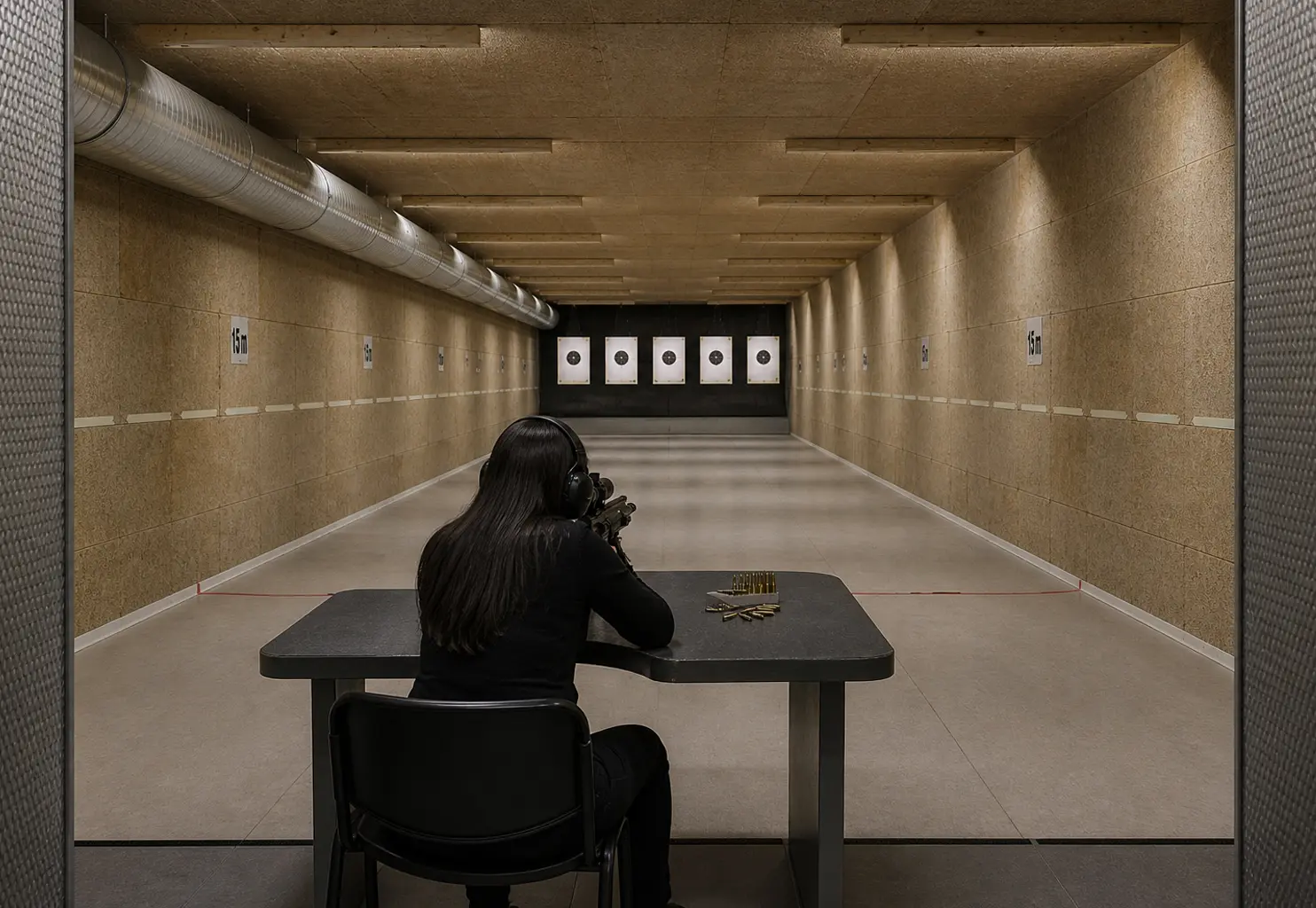
At a government-operated indoor shooting range, powder residue is regularly removed from the shooting lanes after shooting sessions. A mobile industrial vacuum allows for the safe collection of powder residue directly on the shooting lane and collects it in a sealed container. This keeps the facility clean and ready for operation.
Shooting activities also continuously generate powder residue in training facilities for security personnel. Industrial vacuum cleaners are used here as part of regular facility cleaning to reliably remove powder residue and dust deposits.
Every indoor shooting range has different cleaning requirements. The size of the facility, shooting operations, and existing infrastructure determine which extraction solution is most appropriate. Our experts assist operators, planners, and regulatory agencies in selecting a suitable and safe cleaning solution.
Cleaning intervals depend on how frequently the facility is used. In heavily used shooting ranges, powder residue regularly accumulates on the shooting lanes, bullet traps, and floor surfaces. This residue should be removed at regular maintenance intervals to prevent buildup and ensure the safe operation of the facility.
When sweeping, fine powder particles can be stirred up and dispersed throughout the room. This increases dust levels and can lead to deposits forming in other areas of the facility. For this reason, many shooting ranges use industrial vacuum cleaners to directly pick up and safely collect powder residue.
Specially designed industrial vacuum cleaners are used to collect propellant powder residues. These devices are engineered to prevent electrostatic charging and eliminate potential ignition sources. This allows powder residues to be collected safely and in a controlled manner.
The collected powder residue is stored in a sealed collection container within the industrial vacuum. After cleaning, the residue can be safely removed and disposed of in accordance with company guidelines.
Typical cleaning areas include:
Powder residue and dust deposits can accumulate in these areas and should be removed regularly.