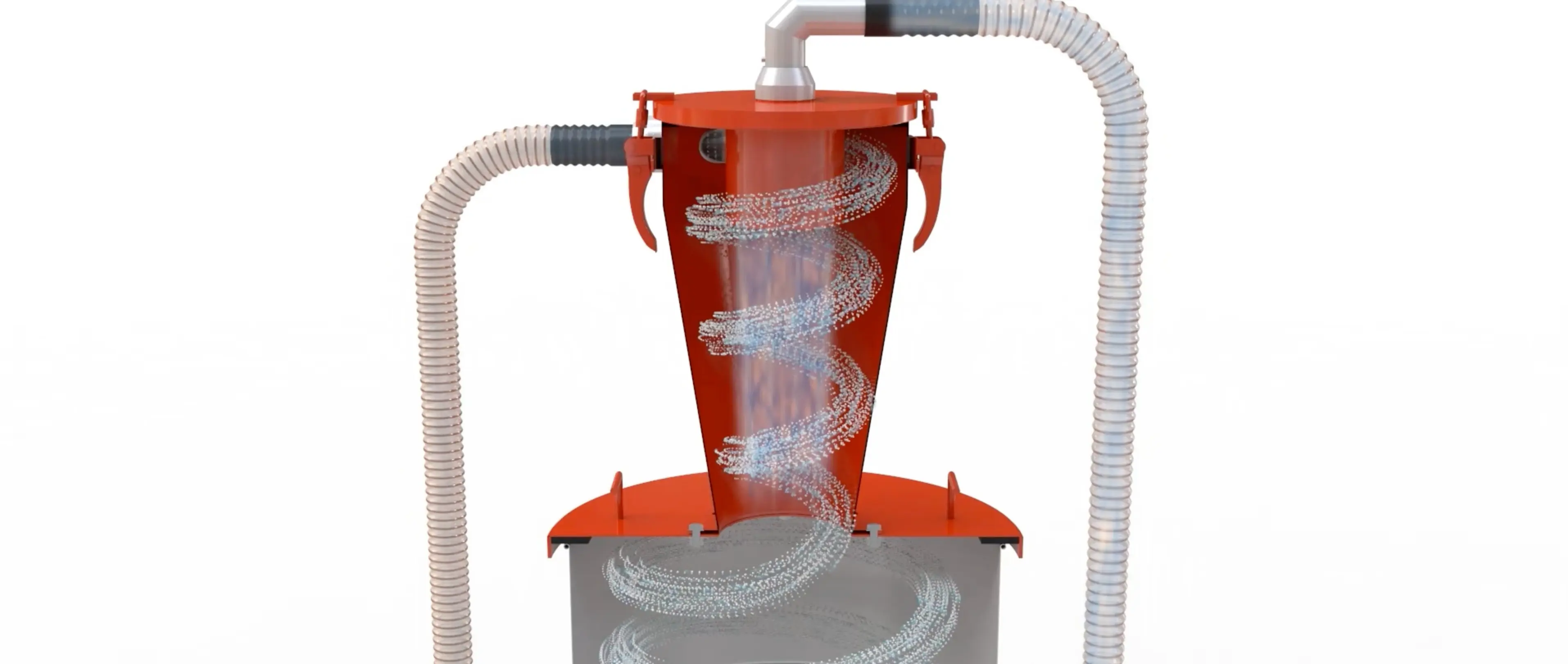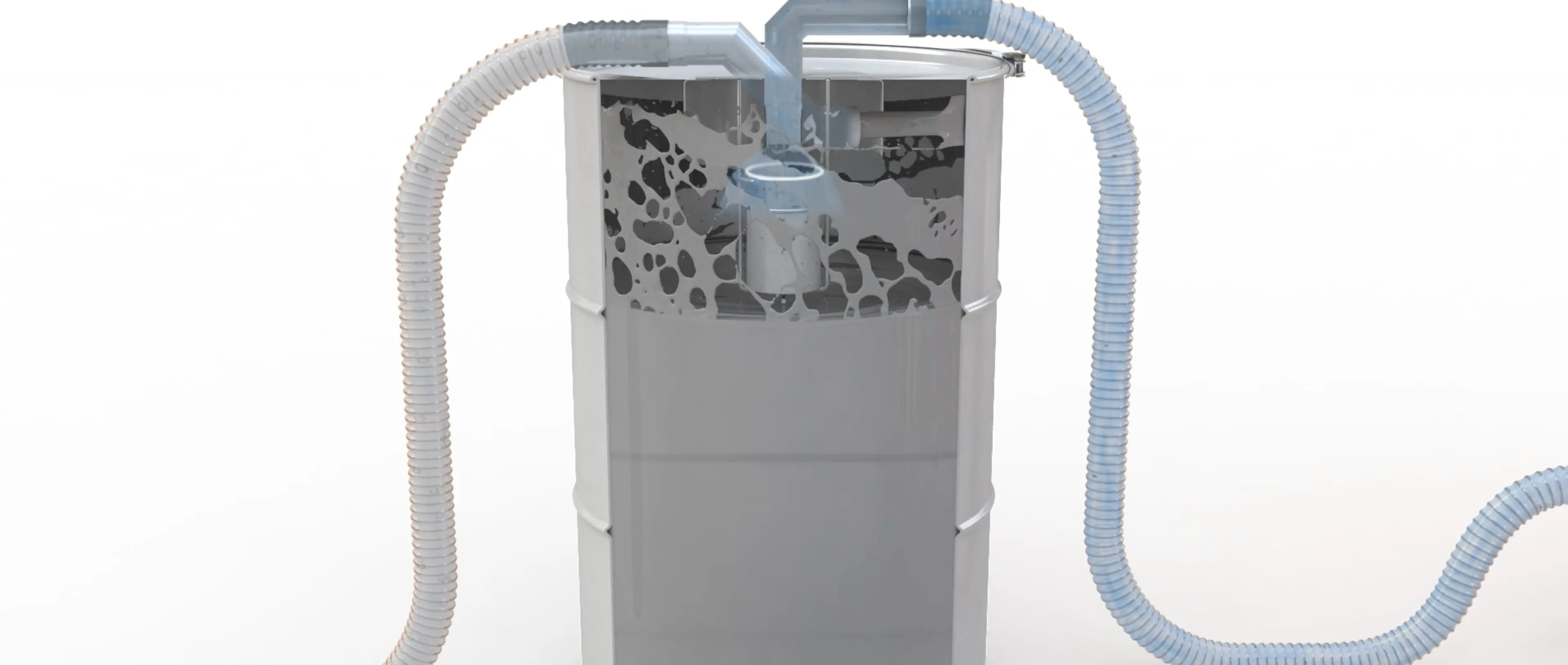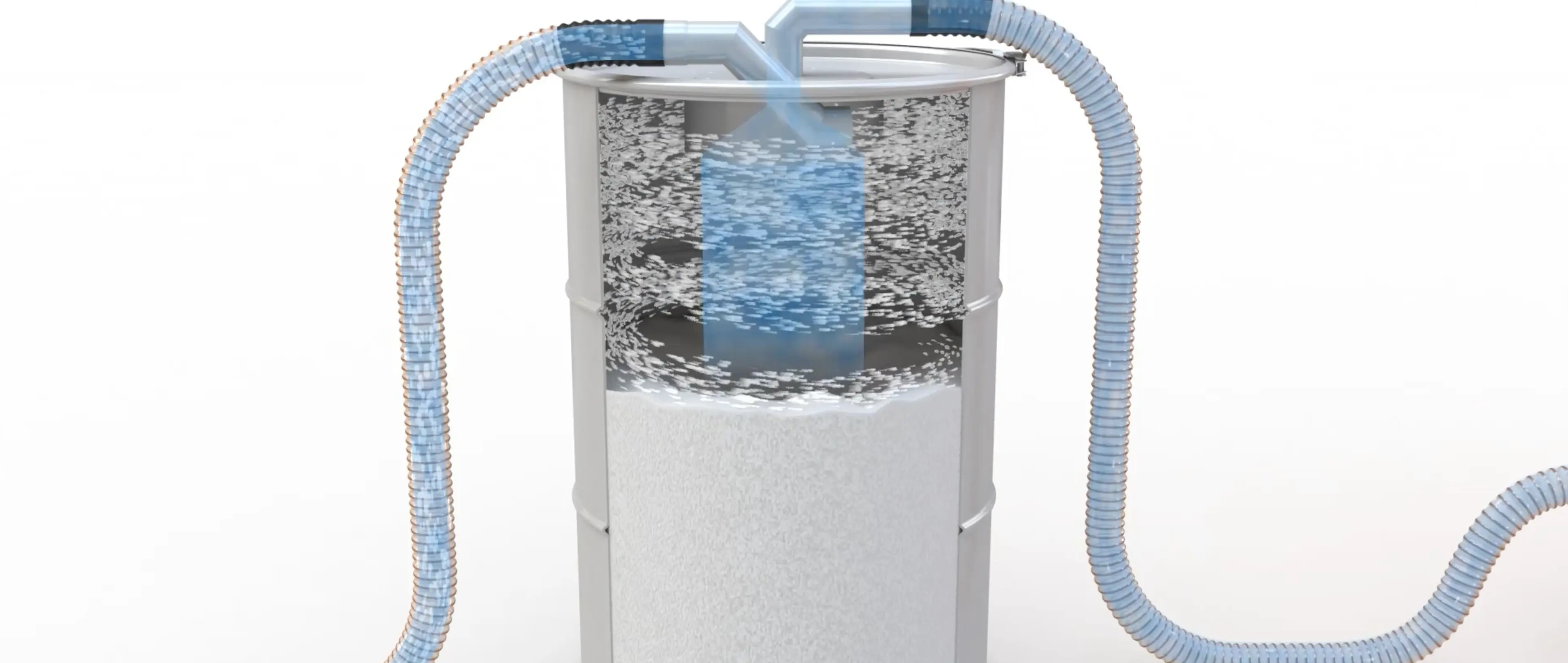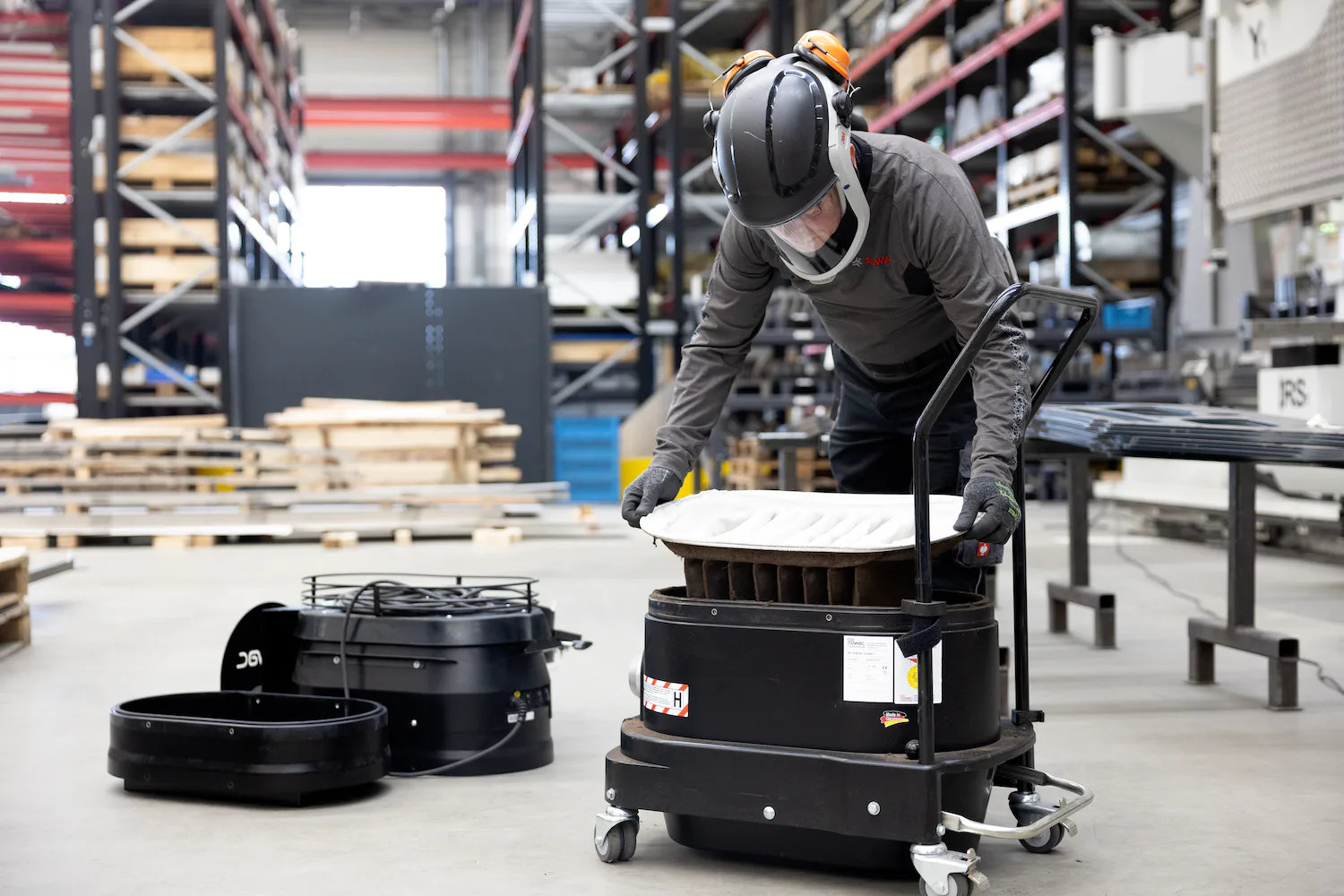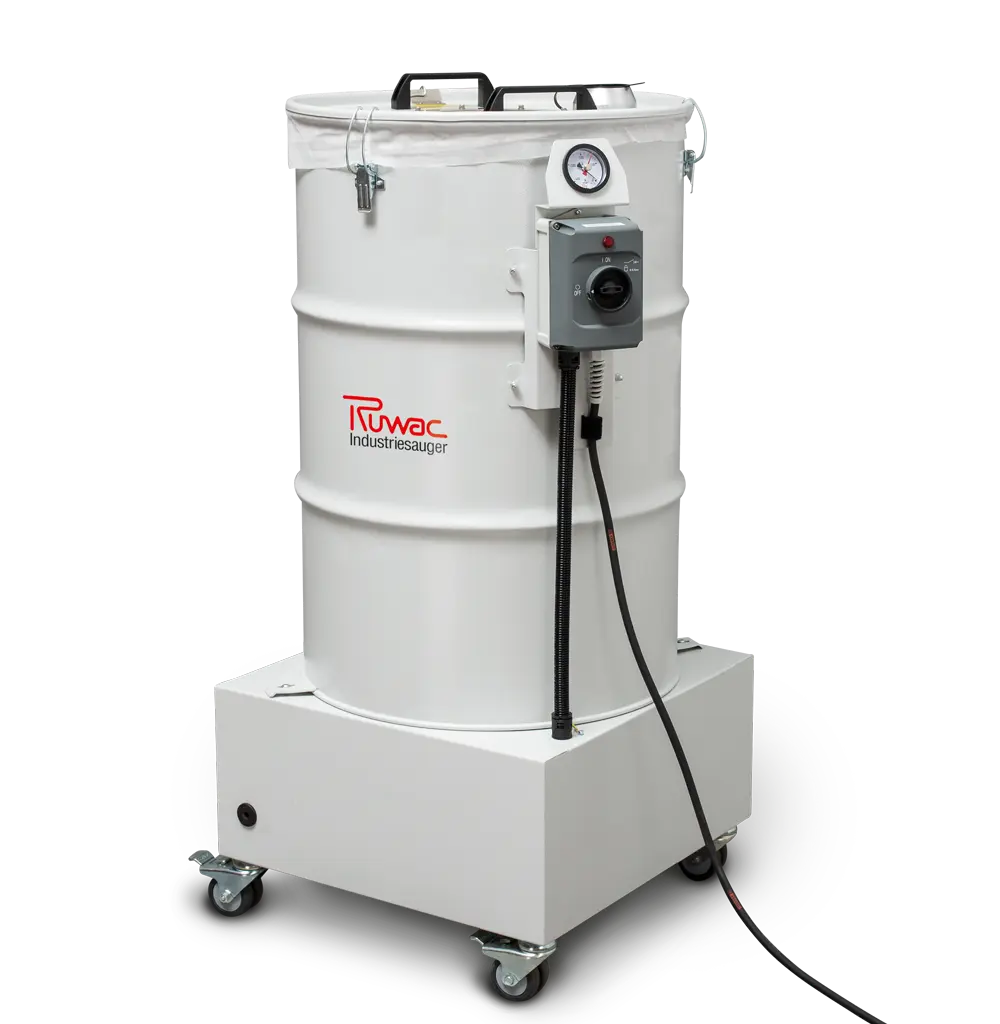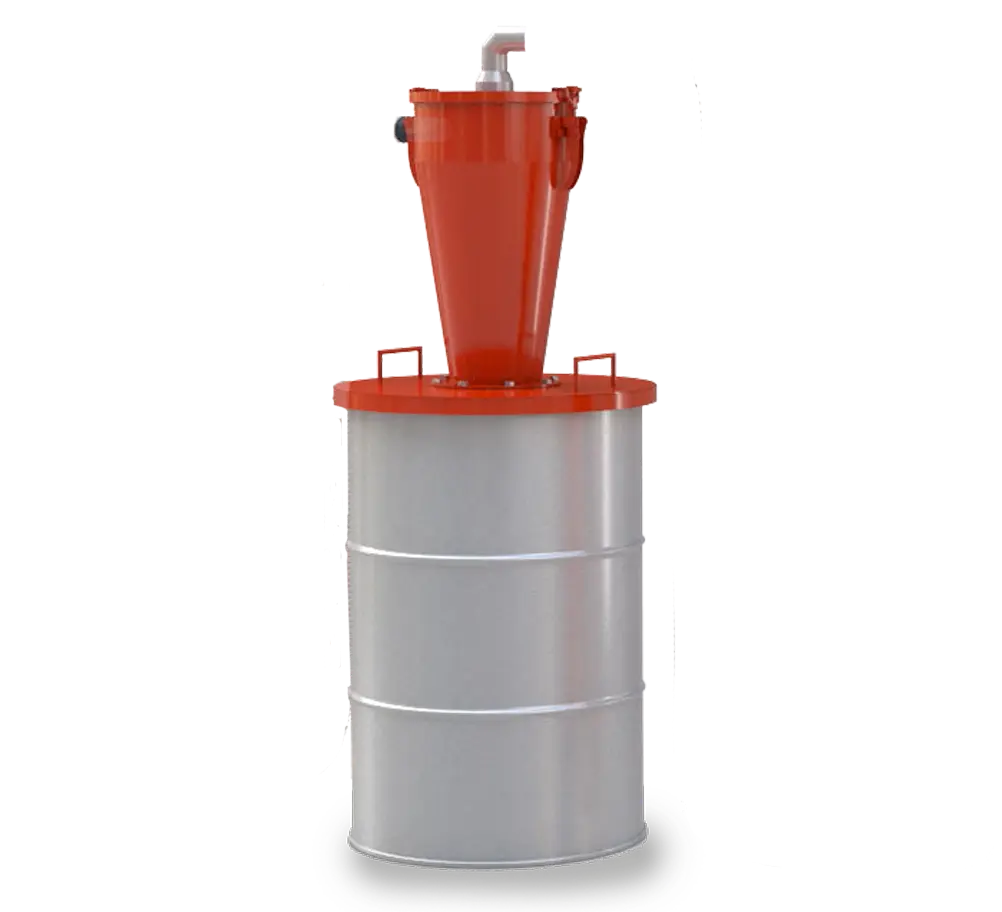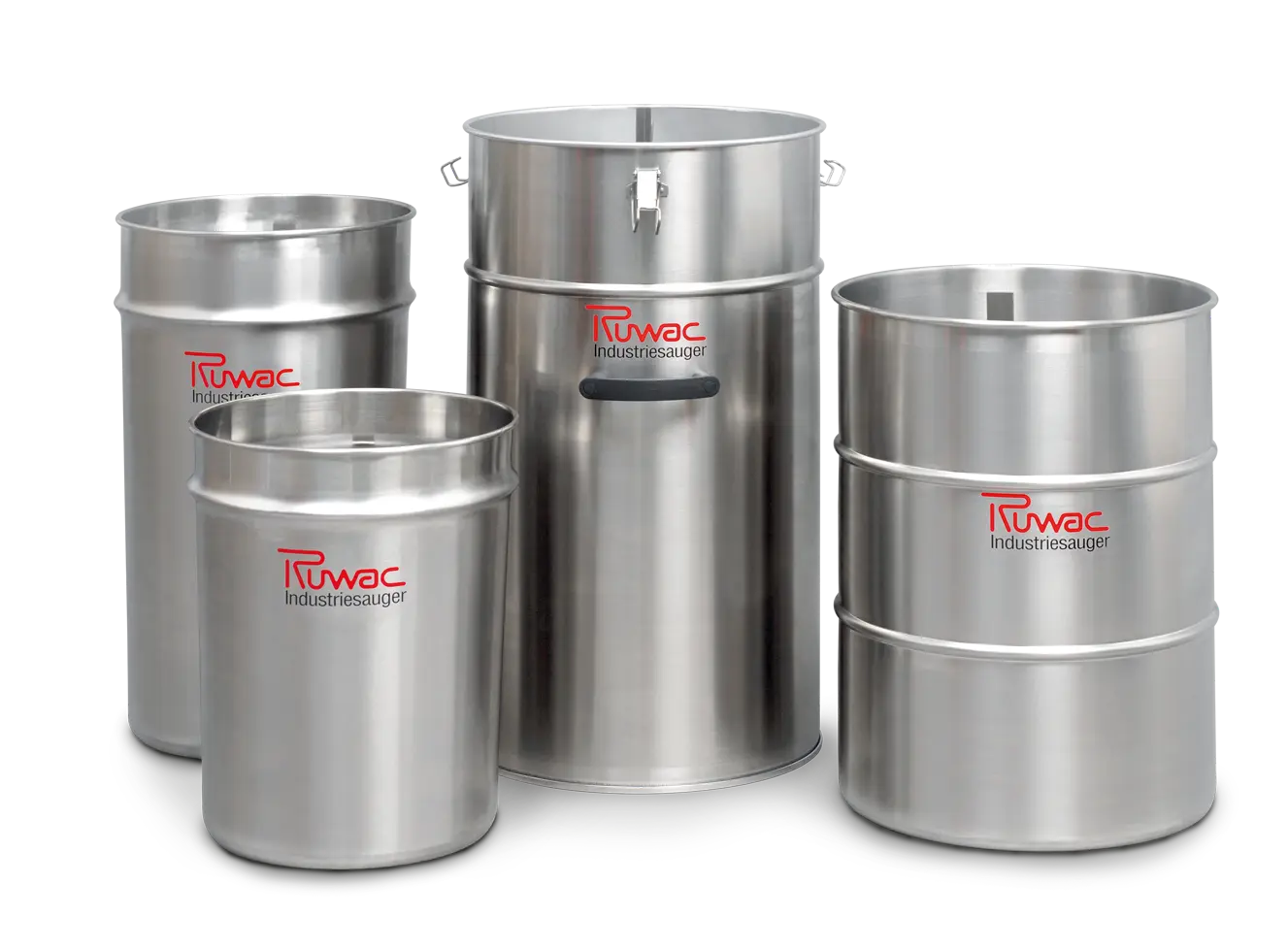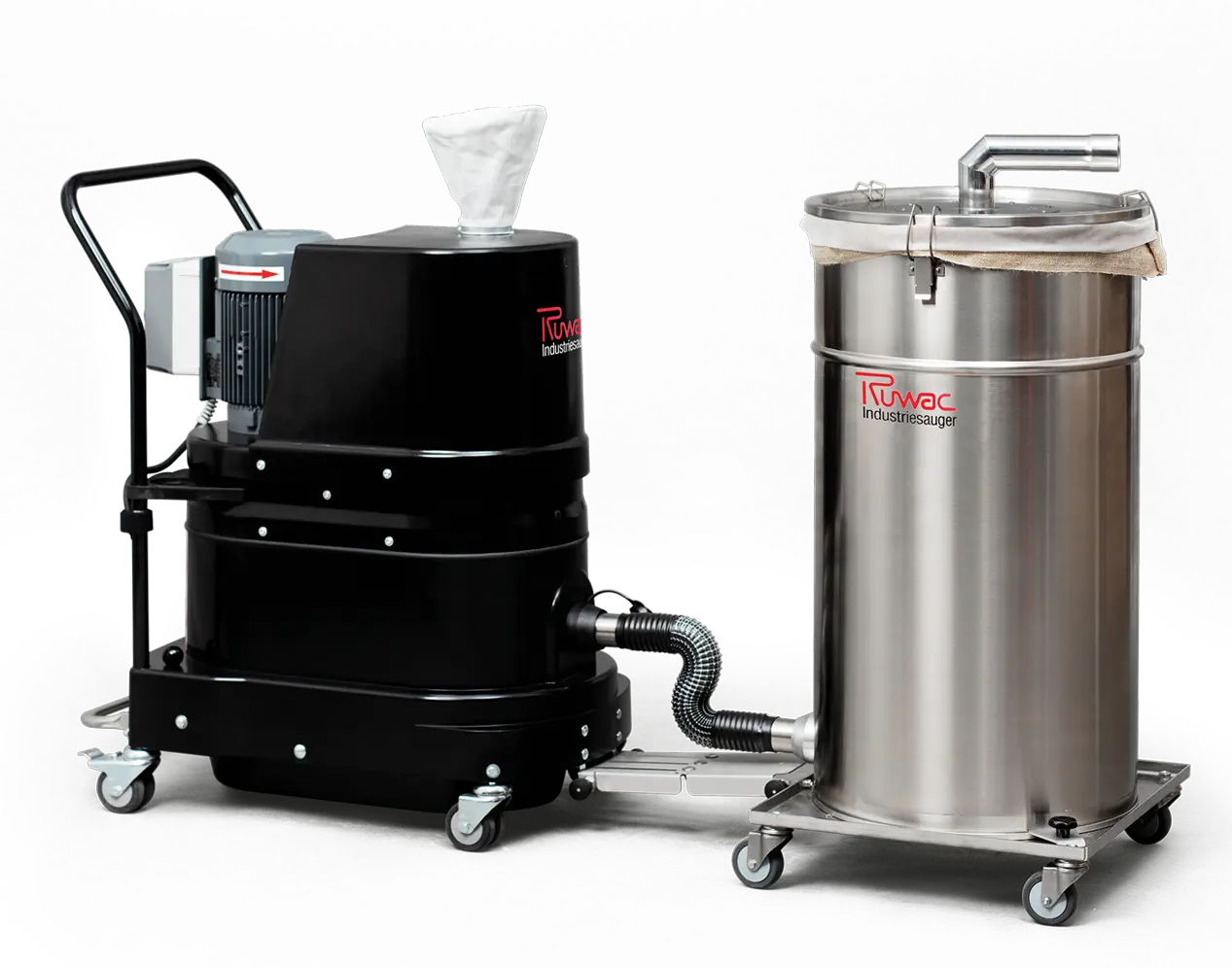


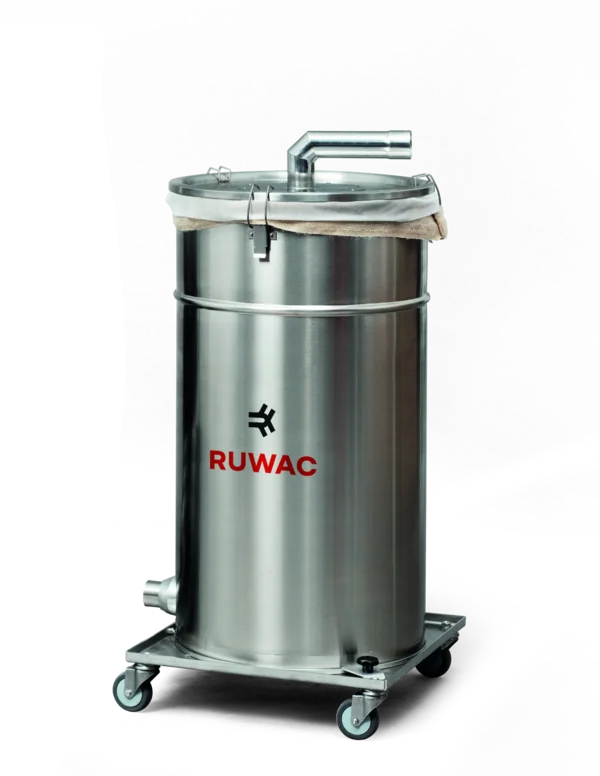
- Function: Separation of large amounts of material before the vacuum cleaner
- Benefits: Significantly reduced filter loading and more stable suction performance
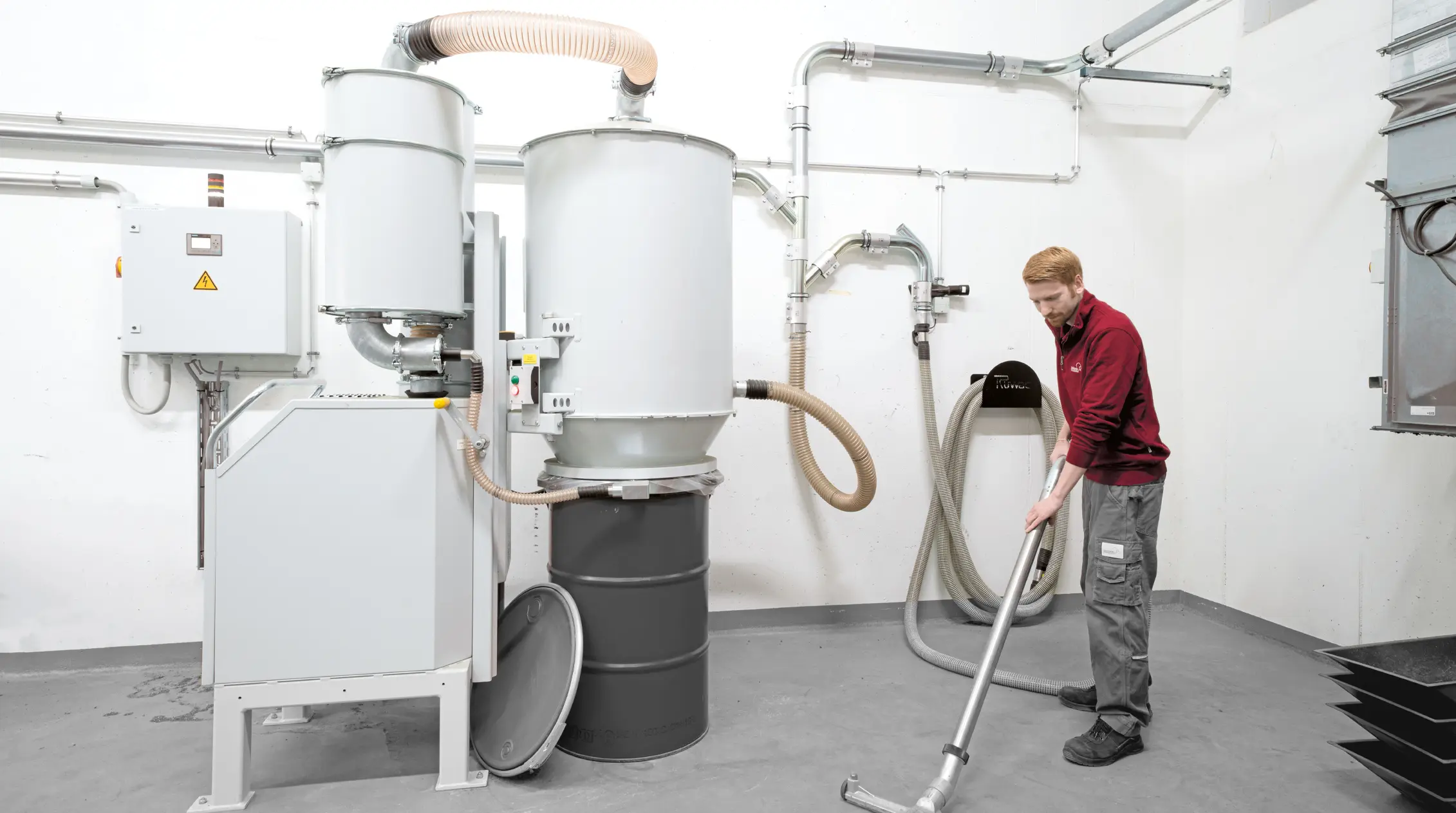
- Application: Dust, chips, and liquids generated in industrial processes
- System: Upstream component within RUWAC extraction systems
- Process advantage: Early separation of the material flow instead of downstream filtration
- Safety: Controlled material flow reduces strain and risks within the system
- ROI: Longer service life, less maintenance, lower operating costs
Monitor material flows early on. Don’t try to make up for it later.
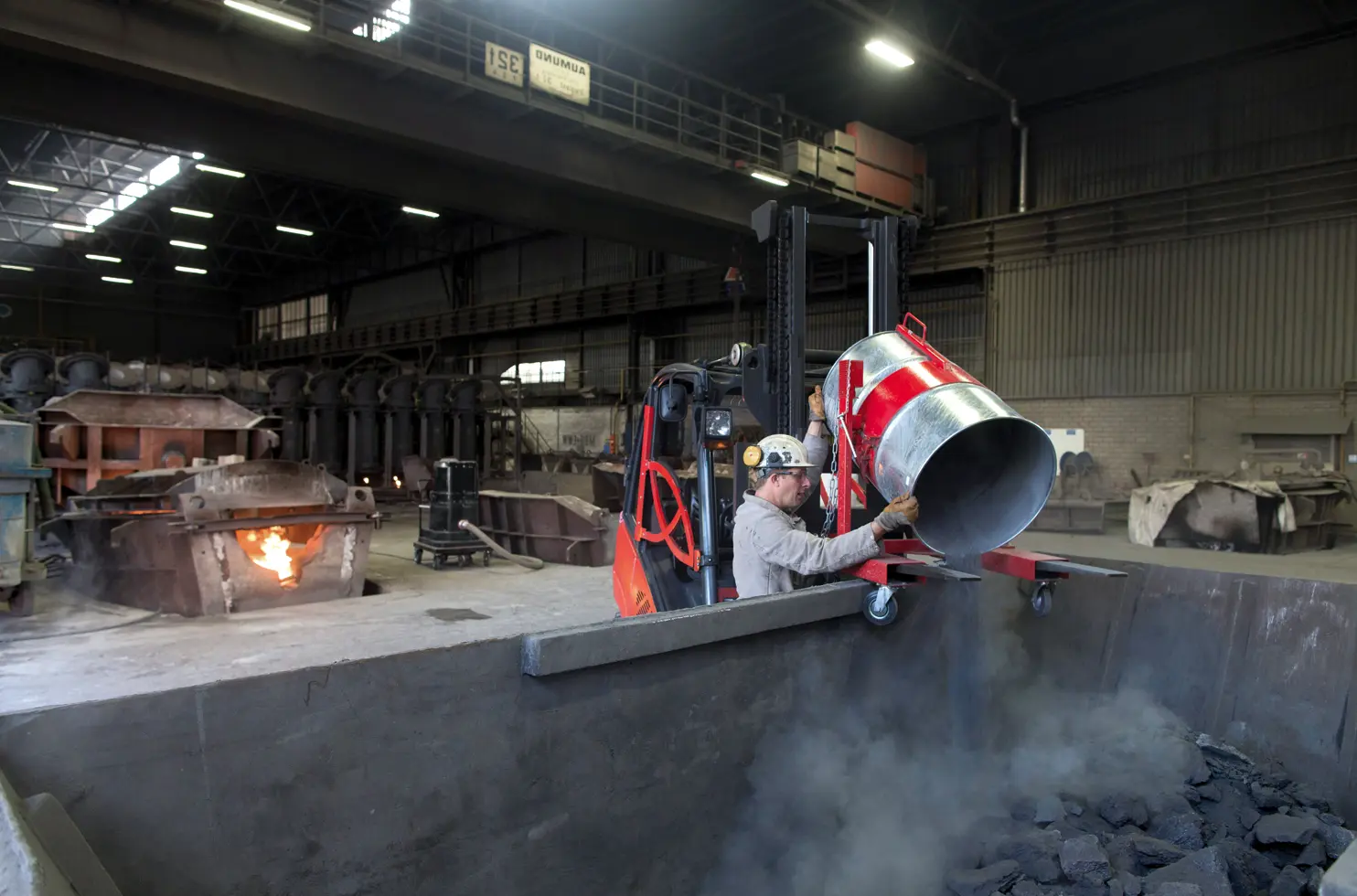
In many extraction processes, all material is fed directly into the vacuum cleaner. Large volumes, abrasive particles, or varying materials come into unfiltered contact with filters, blowers, and system components. The result: increased filter loading, unstable suction performance, and growing maintenance requirements.
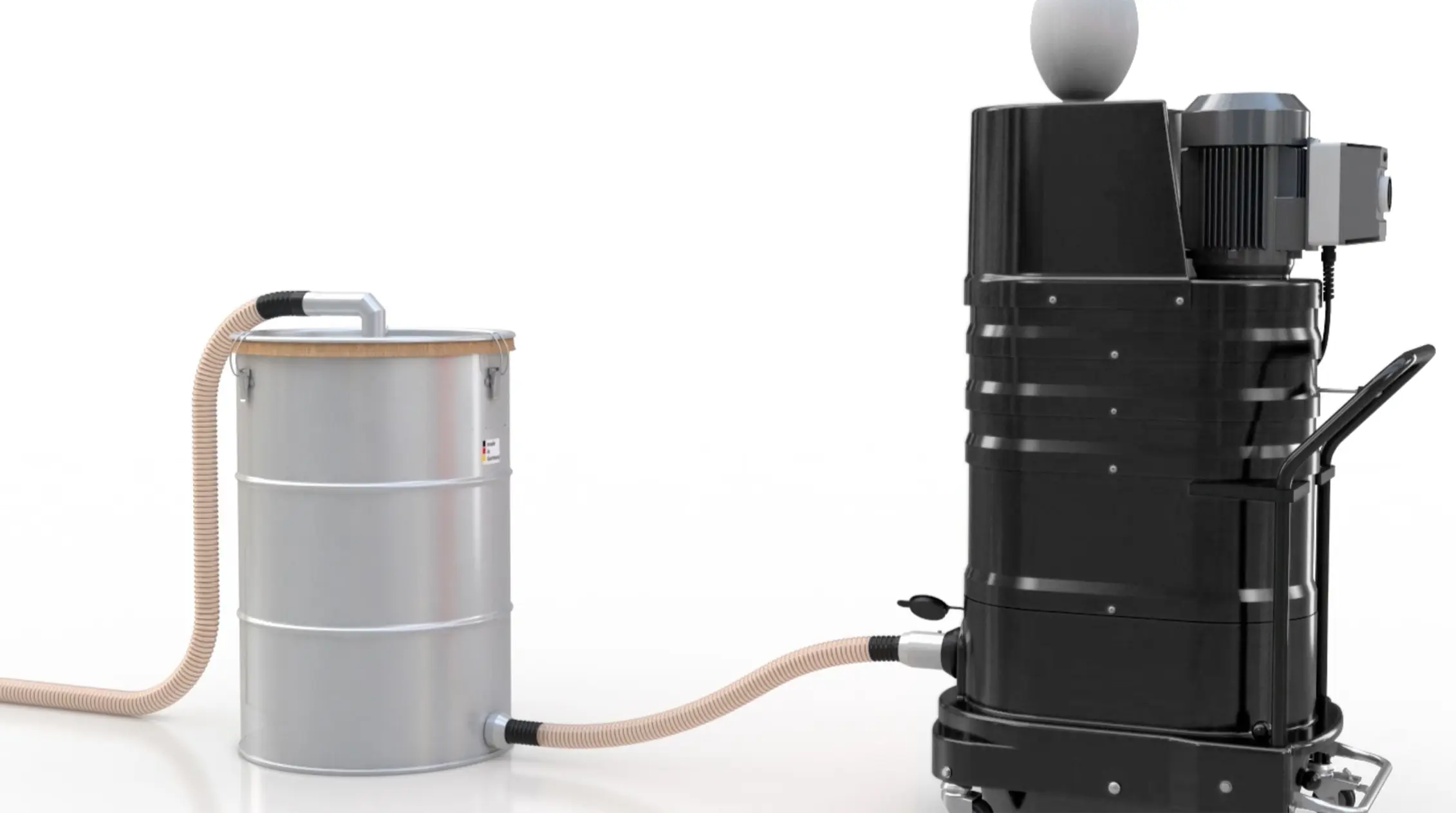
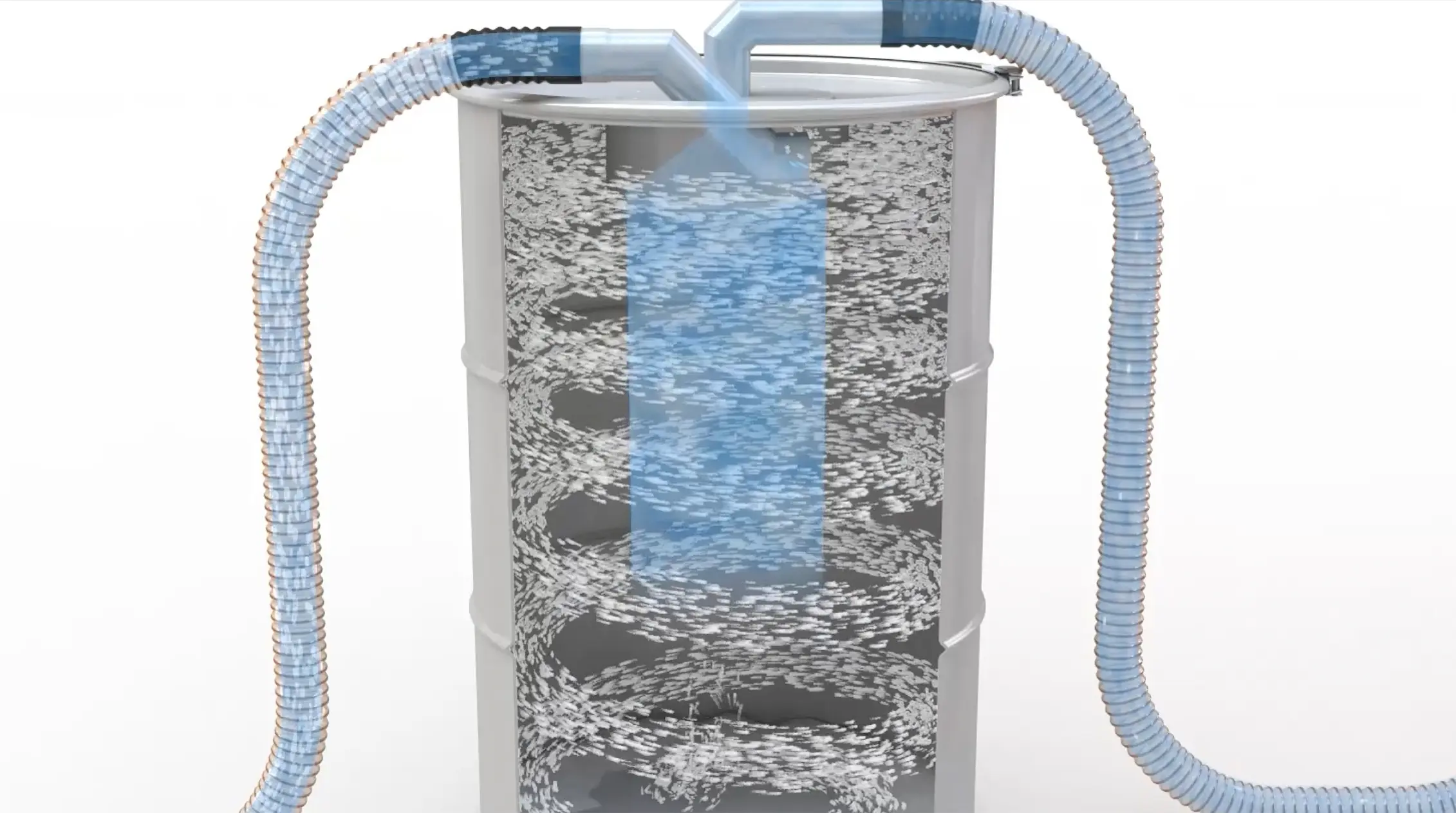
Pre-separation systems intervene earlier. They separate material streams before they reach the actual extraction system. Large and heavy particles are specifically separated, while the airflow continues with significantly reduced load.
This changes not only individual components but also the behavior of the entire system. Filters operate under more consistent conditions, suction power remains stable, and processes become predictable—even with high or fluctuating material volumes.
Pre-separation is therefore not an add-on, but a decision regarding where in the system material is controlled.
Shift the load
Material is separated before the filter and is not processed in the vacuum cleaner first.
Maintain a stable flow rate
- Consistent flow rate even with high or fluctuating material volumes.
Make maintenance predictable
- Lower filter load reduces maintenance and downtime.